
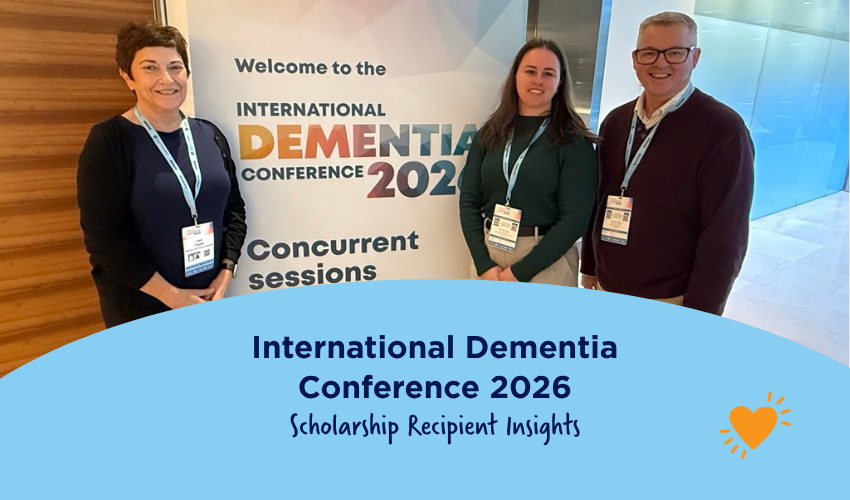
Palliative Care NSW (PCNSW), with funding support from the NSW Ministry of Health, was pleased to offer scholarships to three members to attend the International Dementia Conference 2026, held in Sydney in June.
The following reflections capture our recipients’ key learnings and experiences from the Conference:
Gabrielle Irwin, Occupational Therapist, Integrated Care – Hunter and Lower Mid North Coast, HNELHD
Attending the International Dementia Conference 2026 was such a valuable and inspiring experience, and it’s something that will definitely influence my practice moving forward as a Generalist and Palliative Care Community Occupational Therapist. The conference brought together a mix of professionals, researchers, and people with lived experience, which made it both insightful and really grounding.
I’d like to start by sincerely thanking Palliative Care NSW for supporting me with a scholarship to attend. I’m incredibly grateful for the opportunity—without that support, I would not have been able to be part of such a meaningful event.
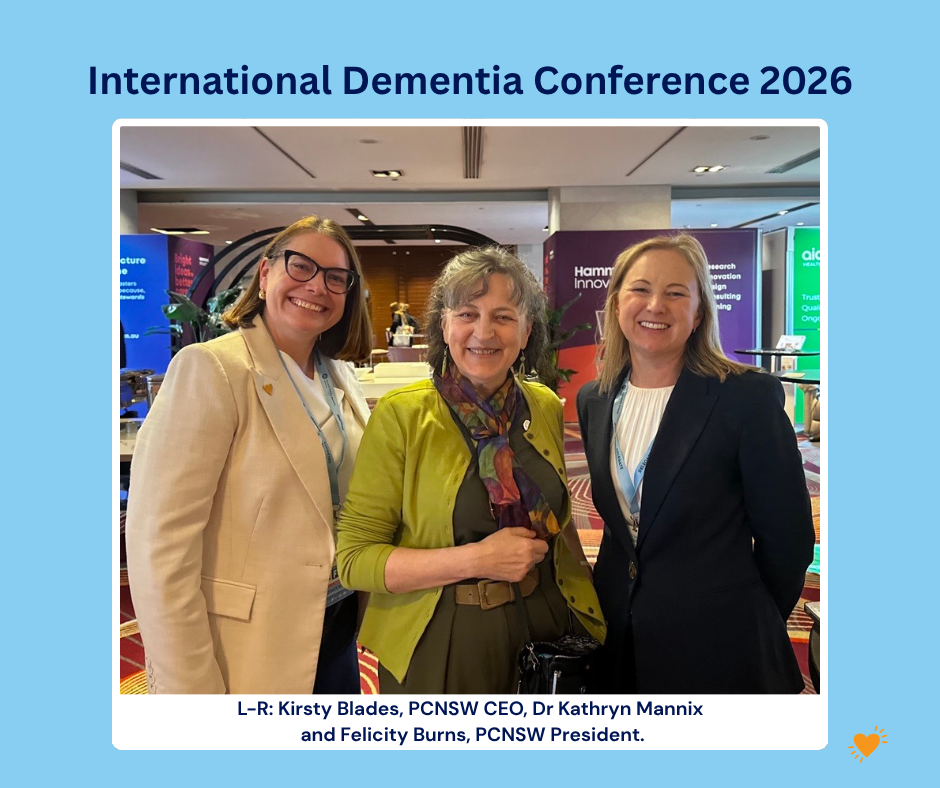
One of my favourite presentations was “Whole of Life Conversations” by Dr Kathryn Mannix. She spoke of how, as health professionals, we often recognise when someone is dying—but many people and families don’t understand what “ordinary dying” actually looks like. Dr Mannix reminded us how important it is to explain what is happening (and what might happen) in a clear and compassionate way. Her idea of “narrating the dying” really stayed with me. It highlighted how we can reduce fear and uncertainty just by talking people through the process in a gentle, honest way.
I also really connected with Dr Allen Power’s presentation. His message—that people with dementia are not abnormal, but the way we care for them often is—was both simple and powerful. The examples he gave, including being showered by a different stranger every day, being locked-in, or uncomfortable environmental factors like temperature, helped the audience understand why a person with dementia may display “challenging behaviours”, as these are things most of us would find distressing. I found the idea that “dementia is a shift in the way people experience the world around them” something to consider and remember when making recommendations. As a community OT, I’m often making recommendations for people living with dementia and their carers. It reminded me that I need to slow down and really understand the person—their routines, preferences, and what matters to them—before jumping to solutions. It made me want to be more intentional about making recommendations that fit into the person’s life, rather than expecting them to adapt to systems or solutions that may not suit them.
Another highlight was Teun Toebes’ presentation, “Looking differently is doing differently,” and watching his film Human Forever. This really reinforced the importance of quality of life. While this is something I already try to prioritise in my work, it was a great reminder and clarification of just how central it is. It’s not just about safety or function—it’s about meaning, connection, autonomy, and enjoyment.
There were also so many other takeaways across the conference that will shape my practice. A common theme throughout was the importance of truly person-centred care and taking the time to listen and understand people’s lived experiences. Hearing directly from people living with dementia and their carers was especially impactful and tied everything together.
Overall, I’ve come away from the conference feeling motivated, reflective, and more confident in the direction I want my practice to take. I’m really looking forward to applying these learnings in my work and sharing them with others.
Nigel McGothigan, Nurse Practitioner, Uniting NSW/ACT, Mid North Coast NSW
Firstly, I would like to thank the Palliative Care NSW Executive and the NSW Government for the honour of being granted a scholarship to attend the International Dementia Conference 2026. I am humbled and privileged to be chosen among many applicants and feel an added duty as it is to reflect, contemplate and consider the learnings from fellow colleagues and international speakers.
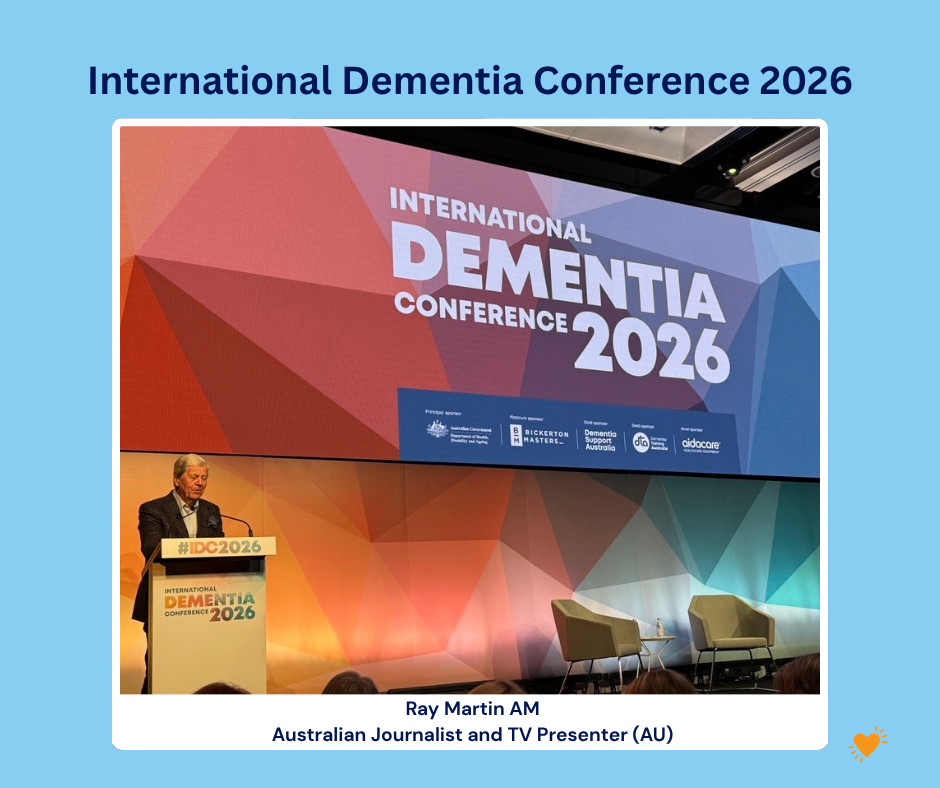
The theme did not disappoint: “The whole person. The whole point”. All speakers and breakout sessions were aptly titled and gave importance to unveiling, understanding and uncovering the concepts being addressed.
For most of us, seasoned practitioners; I have been at this for 38 years; we become a little weary and dare I say cynical of what can be valued added to our care practices day in day for the consumers of care. At times there can be a genuine feeling of ‘this again, did we not do that 10 years ago!!!!’ often being uttered at many a conference. But 2026 IDC felt different. If felt as if something had changed, not only in the delegates but in the speakers as well. Whilst there was some fantastic scientific data presented and brain mapping and discussion on topics of interest from the world of clinicians; the elephant was finally being addressed in the room. The recognition of two things: (a) the person experiencing and living with the disease is the expert of their disease and (b) heartfelt apologies in delivery of services that did not meet the needs of the person. For the first time, we collective expert clinicians were the novices who did not have the answers.
We reminisced around frustrations in heath informatics with Dr Sanka Amadoru (Australian Geriatrician) as being siloed and perhaps how we as clinicians added to the silo mentality in our inability to share information across services, across regions, across the nation. We were dutifully reminded of the many failed opportunities experienced in remaining metro-centric in our health budgets, forgetting that the majority of our communities lived in rural and remote areas. In doing so we remain non inclusive, non equitable and judgmental of those who the system failed; blaming the person and not the system that failed them. Prof Craig Ritchie (Scottish Brain Sciences) reminded us that innovations in research and early intervention and detection of Alzheimer’s disease through positive brain health is achievable if only funding was more equitable and non institutionalised. Food for thought!
Q: How does my relationship with my consumers and their multidisciplinary teams and multifaceted treatment add to the statics of ‘white noise’? How many times do I ask my consumer to fill in a duplicate form or questionnaire asking the same repetitive questions over and over again? How do I add to the burden of services remaining in silo? Can I stop adding to this information fatigue experienced by vulnerable consumers of services?
We were humbled by Dr Kathyrn Mannix (Palliative Care Specialist UK) in acknowledging that the body of the person with a life-limiting illness knows what to do, it knows how to die. All we need to do is to listen to them and their body. Our professional minds and clinical expertise may often get in the way of a ‘death how they would like to experience it’. We are called to be midwives in this sacred space of end-of-life care, waiting, anticipating, but more importantly standing witness to the miracle that the person’s body knows what to do. How does my vulnerability meet the vulnerability of the one who is dying? The art of listening, not with the head; but with the heart.
Q: How do I add to the burden and stress of the family or their loved one who is dying by wanting to help? What is in me that does not allow me to stop, breathe and listen to the rhythm of the person who is the expert of their disease? Why do I feel I have to have all the answers? Why am I afraid to be vulnerable?
Dr Allen Power (American Gerontologist) asked us, the humble clinician, to dare to dream big for consumers living with dementia. To consider throwing open the doors of our memory support units and beg the question why are we wrestling with chemical and environmental restraints when the true answer lies in personal values, personal ethics, personal meaning, what is it that I desire? What would I want for my care? The answer lies in wellbeing; being proactive in taking risks, throwing caution to the wind, leaving behind a biomechanical model of care to an inclusive model of person centeredness. I am more than the disease and my functional disabilities; how do you enable me to live my best life? Dr Power raised the inertia in the room by calling out our risk based models and institutional mindset and for the time allow us to feel differently, to challenge our ethos and stay in the moment that centres on the person who is living with the disease; not the protection of the Organisation I work for.
Q: How do I continue to perpetuate the myth that I am being person centred, when there continues to be routine times for meals, task focused remains the true nature of the workforce, when there is no choice, when routine and daily activities centre around medication times, when no one truly understands what lies beneath the so called ‘behaviour’ for the consumer trying to tell me they are not safe and do not understand my instructions – why am I not listening to their bodies?
The art of listening, being in the moment, being in the vulnerability, the chaos, the sadness and the joy of living with a life limiting illness was echoed through the largest conference delegate membership of those sharing their stories of self or loved ones and their experiences. This portrayal of rawness, of warts and all, of non-censorship of the reality of those in care was gifted to us by a young Dutch humanitarian activist, Tuen Toebes and a film maker Johanthan De Jong in their documentary Human Forever. The documentary follows Toebes, a nurse, living in a memory support unit of an aged care facility and his ‘housemates’ and their antics, their sufferings, their strength, their resilience and their life. Toebes uses the metaphor of dance, at once being led by and at times taking the lead, the gentle balance of an expertly choreographed number or the wild abandonment of allowing the body to move the way it needs and wants. The true juxtaposition of life as lived by someone with a life limiting illness. To dream, to share space, to make time for each other; the little things that make the difference, the smile, the touch to someone who is truly ‘skin hungry’, to be present, the true art of caring compassionately.
Q: When did I last dance? When did I allow my body to immerse itself in the music and be taken to another space? When was I the choreographer for another? The dance lead? The one who followed? When I was the one who followed, did I resist or be in the moment and enjoy, and experience? When did I listen to my body?
The questions posed in these reflections are not taken lightly. They hit at the heart of an institutional system that does not allow us to stop, pause, listen, hold, become vulnerable, become intimate; in order to shape a future of care that is non-conformist, radical and has the person as the expert of their care in the way they want it; without rebuke and without the BUTS…care, where the power is in their hands and we are being choreographed by them in their dance, their life, their death…
The last words and the biggest reminder of all of this was summed up by Prof Susan Kurrle; 2 eggs and 50 sit to stands. Keep it simple. Keep it real. We as clinicians are the ones that overcomplicate things. In getting out of our own way, we may be able to see the real person and their real needs as the author an expert of their own lives.
Lisa Turner, Clinical Nurse Consultant, Sydney Virtual Hospital, Sydney LHD
Thank you very much for providing me with the opportunity to attend the International Dementia Conference in Sydney. The two-day conference was outstanding, and I found it both highly informative and inspiring.
As a Chronic Disease and Palliative Care CNC working the community, I support clients and families living with a dementia diagnosis. Attending this conference was particularly valuable as it enhanced my knowledge and provided practical strategies that I can apply directly in my role to improve the care and support I provide.
One of the highlights of the second day was a presentation by palliative care physician and author Dr Kathryn Mannix. She shared the story of a patient she had cared for at the end of life and spoke about how to have meaningful conversations regarding dying, death, and end-of-life care. Her presentation was both moving and educational, and I found it captivating.
Another memorable session was delivered by Craig Ritchie, Professor of Brain health and Neurodegenerative medicine, who discussed not only the diagnosis and management of dementia but also the importance of dementia prevention through early intervention and risk reduction strategies. This was particularly interesting, as it highlighted the potential for proactive approaches to improve brain health and reduce future dementia rates. I hope to see these preventative strategies become more widely adopted in Australia.
In addition to the excellent presentations, the conference provided wonderful opportunities for networking, learning from colleagues, and exploring the many resources and exhibits available. Overall, it was a fantastic experience, and I am very grateful for the sponsorship that enabled me to attend and bring back valuable knowledge to support my practice and patients.
Following the conference, I plan to share the knowledge and insights I gained with my colleagues. I hope to deliver a formal presentation, particularly focusing on the identified risk factors for dementia and the evidence surrounding dementia prevention through early intervention and lifestyle modification. I believe this information will be valuable in raising awareness, supporting health promotion initiatives, and encouraging conversations about reducing dementia risk within our community. By sharing what I learned, I hope to extend the benefits of this educational opportunity beyond my own practice and contribute to improved care and prevention strategies across our service.
Thank you again for your generous support and for making this valuable professional development opportunity possible.
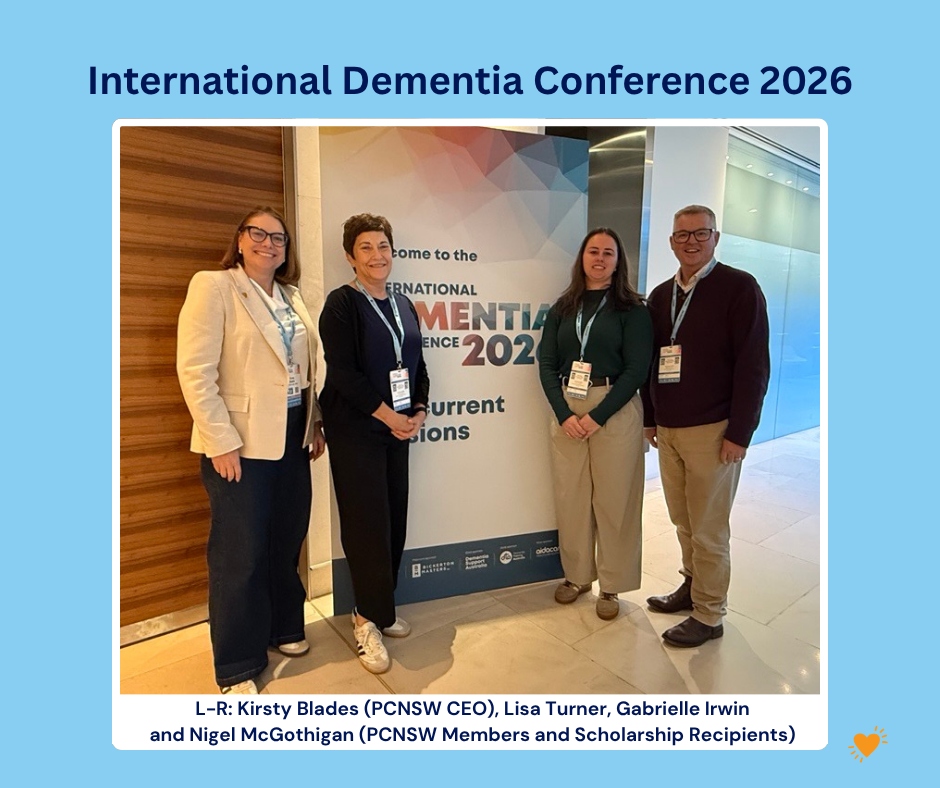
PCNSW was delighted to support these members in accessing this significant professional development opportunity, enabling them to deepen their knowledge of dementia care while also connecting with peers and leaders in the field.
Resources and books of interest that were highlighted at the Conference
Dr Kathryn Mannix, Dying for Beginners
HammondCare Bookstore, including newly released The Positive Ageing Equation